
News

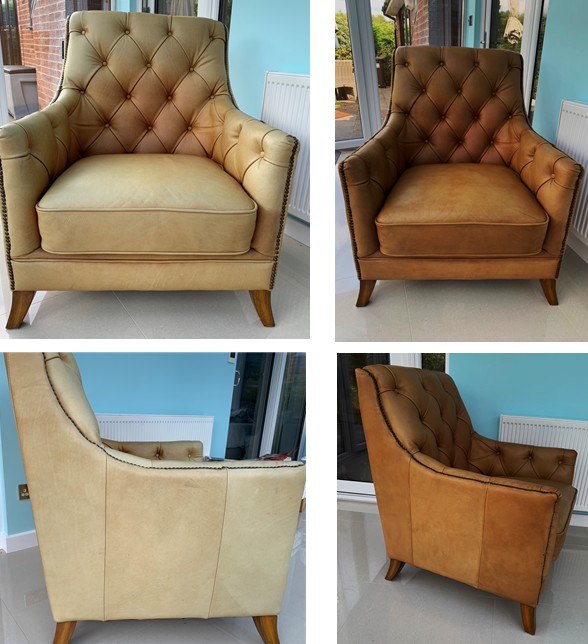
HOW TO DYE A LEATHER SOFA


When it comes to dyeing leather sofas or bags, it's important to use a dye specifically formulated for that type of leather.
The only type of leather which can be re-dyed is 'Aniline' leather or veg tanned leather, its absorbent therefore a dye can soak in to the surface.
Regular fabric dyes or paints won't adhere properly to leather and may result in poor color penetration or uneven coverage.
Here are a few steps you can follow to dye your leather sofa:

Clean the leather:
Before dyeing, thoroughly clean the leather surface to remove any dirt, contamination, or previous treatments.
Use a leather cleaner and firmly wipe the leather leave to dry.

Test the dye:
It's crucial to test the dye on a small, inconspicuous area of the sofa first to ensure it produces the desired color and doesn't damage or discolor the leather. Apply a small amount of the dye on a hidden section and wait for it to dry completely before assessing the results.

Apply the dye:
Once you're satisfied with the test, you can proceed to dye the entire sofa. Follow the instructions provided on the instruction on the leather dye. Typically, you'll need to apply the dye evenly using a sponge. Work in small sections, ensuring complete coverage.

Allow drying time: After applying the dye, allow the sofa to dry thoroughly according to the manufacturer's instructions.  Make sure to follow the recommended drying period before using the sofa.

Condition the leather:
Once the dye is completely dry, condition the leather to restore its softness, sheen and maintain its quality. We have a range of leather conditioner recommended by for aniline leather.


It's important to note that dyeing leather can have varying results depending on the type and condition of the leather, as well as the dye product used. If you're unsure or uncomfortable with the process, it's always best to consult us so we can guide you through the dyeing process or provide professional assistance.

Date Added: 06/06/2023

BEGINNERS GUIDE TO BUYING A LEATHER SOFA

Buying genuine leather furniture requires careful consideration; is it going to be suitable for the environment you’re going to use it?

For the average buyer, leather is just leather, but, this isn’t true! Producers often tan the leather differently depending on the quality of the hide or the end product they’ll be using it for.
While making a final decision is up to you, the details provided in this leather guide has everything that will surely help making the final choice.

Let’s dig deeper into the various types and qualities features of leather.

Different types of animals will produce different quality hides due to their location.  

Hot temperatures tend to have bugs that bite the animal which leave blemish marks, while cool climates don’t endure from insects as much so the hides have less scars.  

Different areas of a hide give different quality leather. 

The lower belly area tends to have looser flesh fibres so this tends to stretch more, a good upholsterer will upholster this area on the back of furniture where it won’t receive any wear.  

There are more wrinkles in the hide around the legs, neck and head, these scars and wrinkles are completely natural but are almost impossible to remove in the processing of the leather.


Different layers within the hide also have a big influence on quality. 

Full grain leather is made from the top layer of the hide; it’s also the best and strongest quality of all the layers, it has a natural skin texture.

Top-grain is also made from the top cut of the leather, but it may have natural imperfections which have been sanded out and an artificial skin grain put in its place.

Split hides are when the hide has been split from a thicker hide to make thinner, more workable leathers. Some embossed leathers come from split hides, due to the fact that there is no texture left when the Top Grain is removed. You will see these listed as "embossed split leather".


Suede
Is part of the leather left behind after the top has been split away from the hide, this is why it has that velvety nap on top and the bottom of the leather.
We don’t recommend this for durability as it stains very easily, almost impossible to clean effectively, and impossible to restore colour successfully.


Pigmented Leather
This surface has a finish containing a flexible durable pigment, it has complete colour coverage, it can be plain or multi tonal in colour.
A great choice for sofas and car seats, can be cleaned, repaired and restored successfully.
Make sure you’re purchasing a top grain or full grain version of this leather.


Aniline Leather

Is a leather that has not been treated with pigmented finish.
The finish is transparent so the natural smooth skin surface can be seen through the colour.
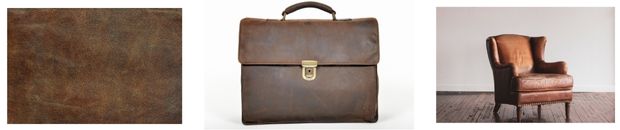
It’s normally treated with oil or waxes to give it a rustic vintage appeal.
It will absorb stains/liquids but protectors are available, it is also vulnerable to fading but regular conditioning treatments should really slow the fading process.
Can be successfully revived using our aniline products 


Semi-aniline
Semi-aniline leather is leather has a natural leather skin grain which is only slightly coloured with a layer of dye or micro-pigment, it is then sealed using a tinted coloured or clear sealant, therefore it offers more protection than an aniline leather.
It is still prone to absorbing stains/liquids but protectors are available, it is also vulnerable to fading but regular conditioning treatments should really slow the fading process.
Can be successfully revived using our aniline products 


Date Added: 30/01/2023

THE DIFFERENCE BETWEEN A LEATHER DYE AND LEATHER PAINT


WHAT IS THE DIFFERENCE BETWEEN A LEATHER DYE AND LEATHER PAINT?

There’s a big difference between a dye and paint (also known as leather pigment)


Leather Dye

  • Is translucent in colour
  • Does not have any adhesive qualities, it will not stick to a leather surface
  • A dye’s intention is to soak in to the leather (not sit on the surface)
  • You have to apply a dye by hand, by rubbing in to the surface of the leather
  • You can’t completely change the colour of an existing leather by using a dye
  • The term ‘leather dye’ on the internet is used quite a lot to encompass any type of colour you apply to a leather surface, be aware and read the description as ‘leather dye’ may be used to describe a leather paint.
  • If in doubt seek professional advice, we’re here to help!


Leather Paint

  • Is solid and even in colour
  • Have adhesive qualities, its intended to stick on top of a leather surface
  • Leather paint is also known as pigment, its created flexible to stretch with the leather.
  • You can apply leather paint by hand or by spray gun.
  • You can completely change the colour of existing leather by using leather paint
  • Be aware and read a products item description as ‘leather dye’ may be used to describe a leather paint.
  • If in doubt seek professional advice, we’re here to help!

Date Added: 29/01/2023
Showing 28 to 30 of 71 (24 Pages)

Products for Leather